
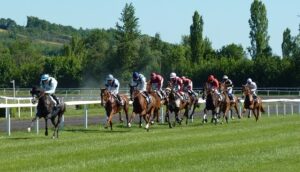
 Famously trained by the late Donald ‘Ginger’ McCain on the sands of Southport Beach on Merseyside, northwest England, Red Rum won the Grand National for the first time in 1973. On that occasion, ridden by Brian Fletcher, Red Rum overhauled long-time leader, Crisp, who had been thirty lengths clear at one stage, in the dying strides to win by three-quarters of a length in a course record time of 9 minutes and 1.9 seconds.
Red Rum and Fletcher returned to Aintree for another crack at the celebrated steeplechase in 1974 and duly won again. Despite the welter burden of twelve stone, Red Rum came home seven lengths ahead of his nearest rival, L’Escargot. In so doing, he became the first horse since Reynoldstown, in 1936, to record back-to-back wins in the Grand National and – notwithstanding subsequent reductions in the maximum weight carried – remains the only horse since World War II to carry such a weight to victory. Red Rum finished second in the 1975 and 1976 renewals of the Grand National, in 1975 under Brian Fletcher and in 1976 under Tommy Stack, who replaced Fletcher after the latter made disparaging comments to the press about Red Rum and was informed by McCain that he would not be riding the horse again.
Stack was once again aboard Red Rum when he lined up, as a twelve-year-old, for the 1977 Grand National. Generally regarded as past his prime, Red Rum was, nonetheless, saddled with top-weight once again, albeit just eleven stone and eight pounds, and was sent off joint-second favourite at 9/1. He took the lead at the twenty-second fence, Becher’s Brook on the second circuit, following the departure of favourite Andy Pandy, and stormed home to his unprecedented third win in the race, twenty-five lengths clear of his nearest rival.
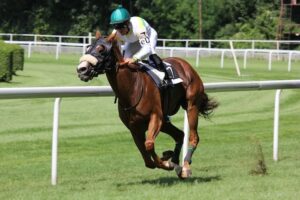 Secretariat, the legendary chestnut racehorse, holds the record for the fastest time ever recorded in the Kentucky Derby. This historic moment occurred in 1973 at Churchill Downs in Louisville, Kentucky, and left an unforgettable mark on the world of horse racing.
Under the guidance of jockey Ron Turcotte, Secretariat showcased a remarkable blend of power, speed, and elegance as he thundered down the track. The crowd was awestruck as he effortlessly left his competitors behind, displaying an unparalleled level of dominance.
Crossing the finish line in an astonishing time of 1 minute 59.40 seconds, Secretariat shattered the previous record, etching his name into horse racing history. This extraordinary achievement reflected his exceptional abilities and the meticulous training that had prepared him for this defining race. In all forms of sport and gambling, speed can be of the essence. That’s why the likes of casinous online casino bonuses in usa appeals to many online casino players.
Secretariat’s victory went beyond the realm of horse racing, captivating the nation and earning him a special place in the hearts of millions. He became a symbol of determination, grace, and the pursuit of greatness.
Even today, Secretariat’s legacy remains strong. His name is synonymous with the Kentucky Derby, serving as a reminder of the extraordinary athletes and moments that define the sport. His record-breaking time continues to inspire future generations, igniting a passion for horse racing and showcasing the limitless possibilities of equine athleticism.
Secretariat’s remarkable feat as the fastest horse in the history of the Kentucky Derby stands as a testament to his unparalleled talent and the enduring allure of this prestigious race. His legacy lives on as an emblem of greatness and serves as a constant source of inspiration for those who strive to push the boundaries of horse racing excellence.
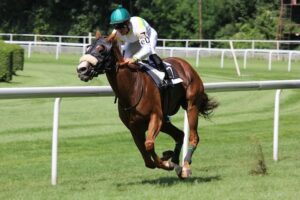 Open to horses aged three years and upwards, the Sussex Stakes is one of the most prestigious and valuable mile races in Europe. Staged during ‘Glorious Goodwood’, in late July or early August, it is, in fact, the first race of the season in which three-year-old milers can tackle their older counterparts at the highest, Group 1 level. As such, the Sussex Stakes has featured many an intriguing clash of the generations and, more than once, has been dubbed the ‘Duel on the Downs’; Goodwood Racecourse lies within the South Downs National Park in West Sussex.
The roll of honour for the Sussex Stakes reads like a ‘Who’s Who’ of champion milers down the years and includes such notable names as Petite Etoile, Brigadier Gerard, Kris and, of course, Frankel. Indeed, the last named remains the only horse to win the race twice. Eeveryone loves a winner both at the races, and if you enjoy a flutter , on real money pokies.
In 2011, the Sussex Stakes was billed as a bona fide ‘Duel on the Downs’ between the three-year-old Frankel who, at that stage of his career, was 7-7, having most recently won the St. James’s Palace Stakes at Royal Ascot, and the defending champion, the four-year-old Canford Cliffs. Frankel was, nonetheless, sent off at odds-on to maintain his unbeaten record and did so in style, readily quickening clear in the closing stages for an impressive, 5-length win.
Three, wide-margin Group 1 wins later, Frankel returned to Goodwood, as a four-year-old, to defend his title. Having frightened off much of the competition, he faced just three rivals, one of which was his pacemaker, Bullet Train, and all of whom were officially rated at least 18lb inferior. Unsurprisingly, Frankel was sent off at hugely prohibitive odds of 1/20 and turned the race into a procession, cruising into the lead at the two-furlong marker and drawing clear to win by 6 lengths, eased down.
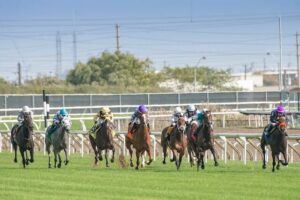 The Fillies’ Triple Crown consists of the 1,000 Guineas, Oaks and St. Leger and, since World War II, has been won by just two fillies, Meld in 1955 and Oh So Sharp in 1985. Owned by Sheikh Mohammed, in whose famous maroon and white silks she raced, and trained by Henry Cecil, Oh So Sharp was hailed by jockey Steve Cauthen as ‘the best filly I rode’.
Having made a winning reappearance in the Nell Gwyn Stakes, Oh So Sharp was sent off 2/1 favourite ffor what turned out to be an epic renewal of the 1,000 Guineas. On the descent into the Dip on the Rowley Mile, victory looked unlikely but, galvanised in the closing stages, Oh So Sharp joined, and passed, leaders Bella Colora and Al Bahatri in the shadow of the post to win by a short head. The thrill of the win applies both to a day at the races, and time on jokaroom alike.
By contrast, the Oaks proved to be a much more straightfoward affair. Sent off 6/4 favourite on her favoured soft going, Oh So Sharp tackled the leader, Triptych, inside the final quarter-of-a-mile and displayed an impressive turn of foot to draw clear in the closing stages and win, comfortably, by six lengths. Cauthen later said, ‘She just raced for fun on ground that suited her.’
Oh So Sharp was subequently beaten, albeit not far, at odds-on in the King George VI & Queen Elizabeth Stakes at Ascot and the Benson & Hedges Gold Cup at York. Nevertheless, she was sent off 8/11 favourite for the St. Leger at Doncaster and, although only workman-like, managed to hold on to beat Phardante and Lanfranco by three-quarters of a length and a head.